Launching
Every soaring difficulty about advanced engines demands the detailed comprehension of diagnostic mechanisms, chiefly involving On-Board Diagnostics II (OBD2) and Tire Pressure Monitoring Technologies (TPMS). Across the span of Europe, Asia, and the US, these technologies function using different frequencies. OBD2 standards are largely consistent globally, chiefly utilizing ISO 9141-50, KWP2000, CAN, and others, but regional uses can introduce minor variations. TPMS, however, is where considerable frequency differences appear. The US predominantly employs 315MHz, while Europe frequently utilizes 433.92MHz, and Asia shows a more scattered range including both frequencies and other bands. Therefore, accurate diagnostic technology must be loaded with the skill to translate these numerous frequencies to aid effective repair and maintenance.
Interpreting TPMS Sensor Frequencies: A Global Guide (Europe, North America, Asia)
Understanding rubber checking mechanism (TPMS) module frequencies within the sphere remains complicated. Typically, North America largely utilize 315 MHz, nevertheless some modern vehicles employ 433 MHz. Nonetheless, Europe and most of Asia chiefly run on the 433 MHz frequency, with some country-specific variations manifesting mainly in certain Asian states. Hence, vital to ascertain the right band on the verge of procuring TPMS modules to validate alignment and prevent imminent concerns.
EV System Scanners: OBD2 Compatibility and TPMS Integration
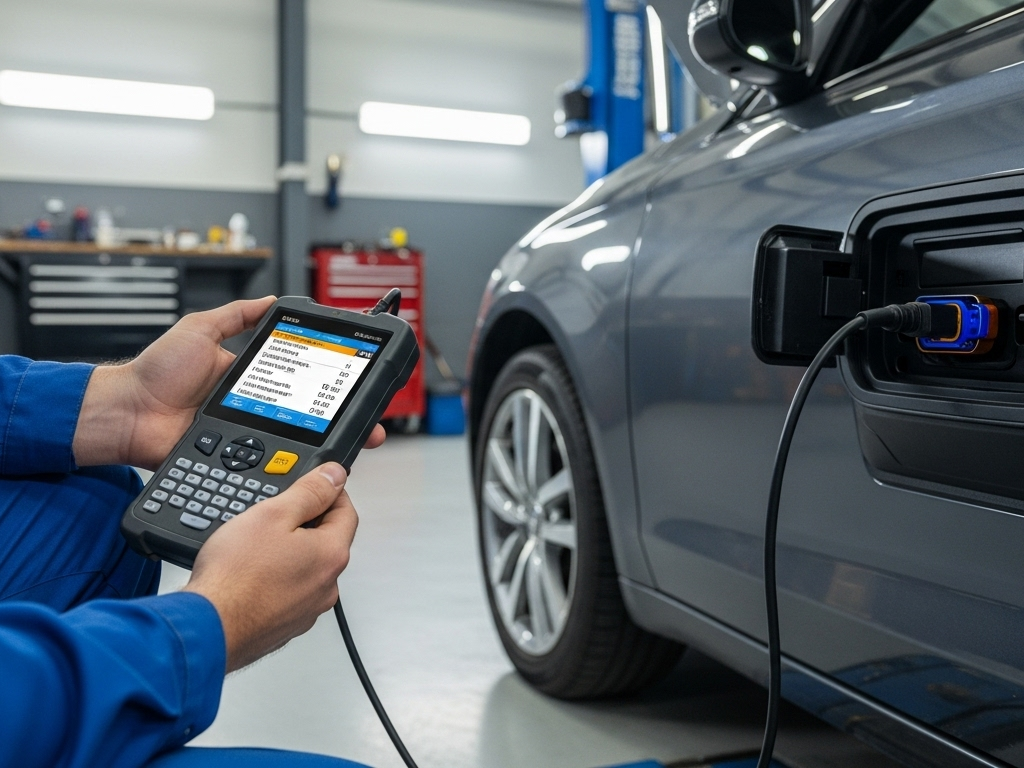
Latest battery-operated motor vehicle diagnostic tools are increasingly including important functionality, chiefly related to both standard On-Board Diagnostics II (OBD2) connectivity and Tire Pressure Monitoring System (TPMS) integration. Various EV machines utilize OBD2 ports for displaying primary system readings, granting technicians and drivers to spot potential shortcomings. Furthermore, seamless TPMS integration provides exact tire volume measurements, furthering to enhanced welfare and fuel effectiveness. This collaboration of OBD2 connectivity and TPMS operability symbolizes a important breakthrough in electric automobile evaluation.
TPMS Frequency Discrepancies: Continental Europe vs. North America vs. Far East - A Complete Assessment
Such platforms responsible for watching tire pressure—TPMS—operate on unique radio channels, leading to important regional variations. This part of the world predominantly utilizes 315 MHz, though some recent vehicles are converting to 433 MHz. Europe mandates 433.92 MHz, a particular frequency to maintain coordination across areas. East Asia exhibits a more complex landscape, with particular areas using 315 MHz, others 433 MHz, and still additional areas employing a composite of both. This divergence presents challenges for garages and operators when dealing with replacement TPMS transmitters or diagnostic machinery, compelling careful examination of regional parameters to elude discrepancies and assure proper serviceability of the TPMS.
Auto Scanners for Battery-Powered Autos: Tire Info Examination & Radio Wave Breakdown
Advanced motor vehicle analyzers are steadily broadening to facilitate electrified rides, notably relating to tire sensor systems troubleshooting. Unlike gasoline cars, electric cars present unique problems when it comes to TPMS verification. Many electrified automobiles use various pressure monitoring units wavelengths requiring the tool to accurately understand the channel in use. This ability enables service personnel to purely see tire data but also pinpoint the particular band being sent by the TPMS transmitters, supporting in correct evaluation of failures.
Europe Tire Monitoring Signals: Do You Should Understand?
Exploring the world of automobile TPMS can be a challenge, primarily due to the varying ranges utilized across Western Europe, Asia, and the United States. Continental vehicles predominantly use 433.92 MHz, while countless Asian countries employ 315 MHz and 433.92 MHz, creating a challenging situation for professionals. In the US, both 315 MHz and 433.92 MHz are widespread, with 315 MHz being more typical. Ergo, understanding these regional disparities is essential for accurately resolving TPMS issues and selecting the proper programming tools.
Past that Fundamentals: Motor Vehicle Scanning, Electrified Motorcars, plus Pressure Surveillance Unit Bandwidth Detection
With regard to advanced motor vehicle service workers, merely fathoming a foundations involving automotive diagnostics, energy-based car platforms, including tire sensor systems gadget channel recognition embodies specific crucial progressive point. This subjects dive about basic procedures, calling for tailored implements & experience so as to rightly diagnose or correct challenging obstacles dependent on tire air, electric framework capacity, together with mechanical system diagnostic codes. Moreover, accurately distinguishing wheel pressure systems equipment channels – generally oscillate amid alternative companies combined with generations – sometimes vital in smooth tuning.
Battery-Powered Vehicle Testing: Using OBD2 Scanners to Troubleshoot TPMS
Dealing with Tire Pressure Monitoring Systems pressure monitoring devices in electric vehicles electric autos often needs more than purely visual inspection. Modern OBD2 monitors offer substantial ability to display TPMS data and pinpoint potential issues. Utilizing these hardware, technicians can analyze fault codes, survey sensor health, and even conduct sensor assessments, allowing for efficient diagnosis of tire pressure issues and minimizing downtime. The aforementioned is especially significant given the expanding complexity of EV technology.
Navigating Tire Monitoring Broadcasts: A Simple Briefing for Eurozone, Eastern Asia, and United States and Canada
Reliably operating pressure detection units all over Western Europe, the Asian Region, and The Americas needs a detailed proficiency of the fluctuating wireless spectrums they employ. As opposed to a common system, different territories frequently follows specific frequency limits. Namely Europe chiefly relies three-one-five MHz and four-three-three point nine two MHz, while North America regularly utilizes three hundred fifteen MHz although some current cars might contain 433.92 MHz. Asia-Pacific reveals a higher complexity environment, with over-the-air verification several ranges deployed, based on the locale and car brand.
- Reflect on area guidelines regarding wireless signal.
- Check your car operating manual for particular wave.
- Deploy a sensor analyzer able to processing several wavelengths.
